OpenAI's Data Says Small Businesses Already Blur Job Lines With AI
OpenAI's new research finds 43.5% of occupation-specific ChatGPT use crosses job lines, and small businesses show more of it than large companies do. Here's where to draw a review line.
TL;DR
OpenAI just measured something small business owners already know from experience: the line between "my job" and "someone else's job" bends a lot more than an org chart suggests. Its new research found 43.5% of occupation-specific ChatGPT use at work involves tasks from a different occupation, and that crossover is even more common at small companies than large ones.
The useful question isn't whether this is happening. It already is. It's which of those borrowed tasks are safe to keep doing solo, and which ones still need a professional's eyes before they go out the door.
What did OpenAI actually find?
OpenAI's Economic Research team analyzed more than 800,000 work-related ChatGPT conversations from U.S. users and found that a huge share of "occupation-specific" AI use isn't inside the user's own occupation at all (OpenAI).
After stripping out generic tasks like writing and scheduling that show up everywhere, 43.5% of the remaining occupation-specific messages, 16.8% of all work messages, involved a task normally associated with a different job. OpenAI calls this pattern task crossover.
It isn't evenly spread. Once generic work is excluded, outside-occupation tasks account for 77% of occupation-specific messages from customer experience workers, 75% from designers, 69% from human resources workers, 56% from legal workers, and 53% from marketers (OpenAI).
Those aren't rounding errors. They're most of what those groups are asking AI to do.
Why does this happen more at small businesses than big ones?
Because a small business usually has nobody to hand the task to. OpenAI found the outside-occupation share among typical users falls from 18.9% in workspaces with 2 to 5 seats to 16.3% in workspaces with more than 100 seats (OpenAI).
That gap runs opposite to how most "AI at work" coverage frames this trend. The usual assumption is that large companies, with more budget and more specialized staff, get more out of AI. On task crossover specifically, the data says smaller teams lean on it harder, precisely because they have fewer specialists to lean on instead.
I'd push back on the framing I keep seeing in this space, that task crossover is some new frontier enterprises are just discovering. Small business owners have covered adjacent jobs out of necessity for as long as small businesses have existed. What's new is that OpenAI put a number on it, and the number confirms this is already the default mode of work at a small company, not an edge case.
What does task crossover actually look like in a real small business?
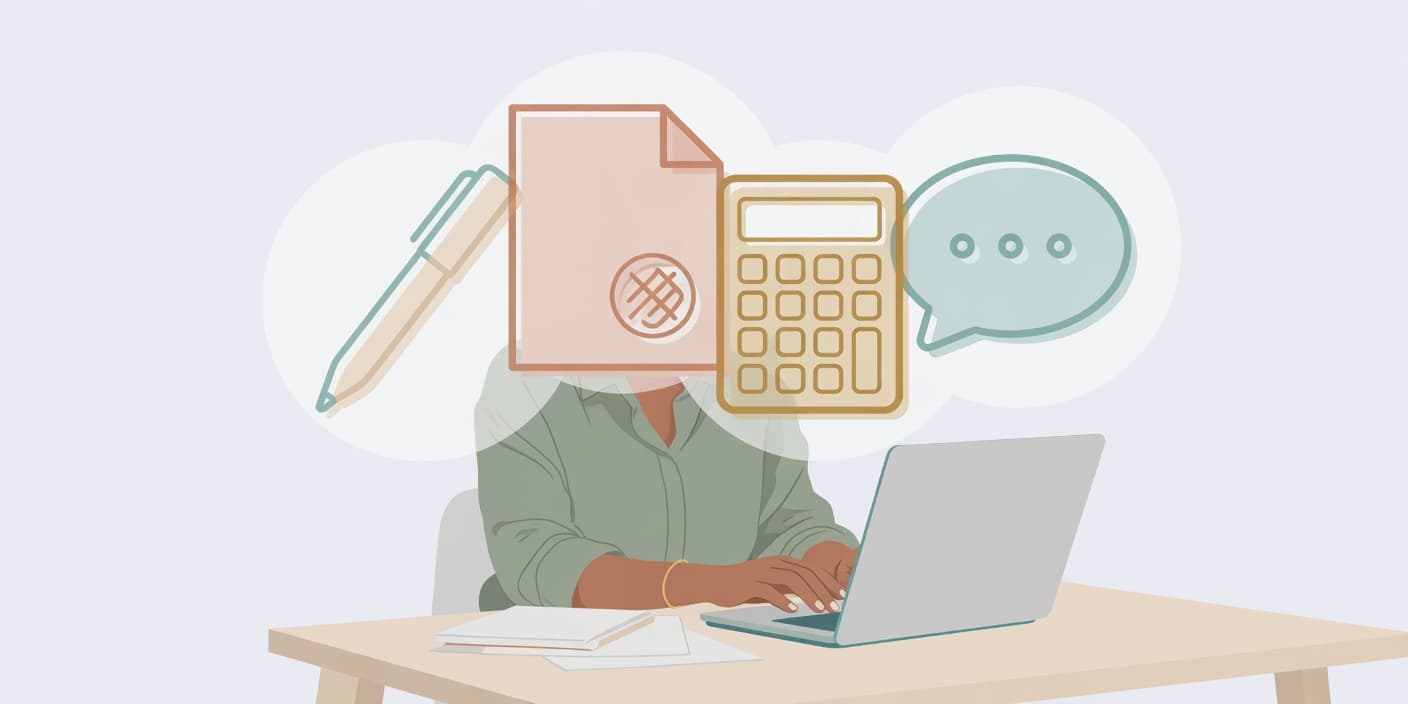
It looks less like a strategic decision and more like a Tuesday. OpenAI's own illustration: "A small-business owner can independently draft copy, review a contract, or perform basic financial analysis," tasks that would normally sit with a copywriter, a lawyer, and a bookkeeper (OpenAI). The report adds a salesperson digging into a customer dataset that once went to an analyst, and a marketer troubleshooting a website without waiting on a developer.
I see the same pattern in Arios's AI audits, just with different job titles attached. An office manager drafts the first version of a client proposal instead of waiting on a freelancer. A shop owner runs a quick margin calculation before a big order instead of calling their bookkeeper for something that doesn't need a full statement.
Neither person would call themselves a copywriter or a financial analyst. They're just closer to the problem than anyone else is that day.
The report's task-level data backs this up: financial calculation and technology troubleshooting are each among the three most common "borrowed" tasks across every other occupation studied. Those two specific handoffs, quick numbers and quick fixes, are exactly where the wait time is shrinking first.
Which crossover tasks are safe to do solo, and which need a professional's eyes?
The test I use with clients is simpler than any category list: can it be undone, and who does it touch if it's wrong? A first draft is reversible. A signed contract, a filed number, or a message sent to a customer usually isn't.
Using AI to mark up a contract clause before a call with your lawyer is a safe, solo, reversible step, since nothing has changed yet. Using AI's markup as the final version without a lawyer looking at it is a different decision entirely, because the business is now bound by whatever it says.
The same split applies to money and people. A rough financial scenario for your own planning is fine to run solo. Numbers that go to a lender, an investor, or a tax filing need the same professional check they always did.
An HR message drafted for tone is fine solo. A termination, an accommodation decision, or anything with legal exposure isn't.
This is the same principle behind building an approval gate before you let an AI agent act on its own: the fix isn't refusing to let AI touch adjacent work, it's deciding which outputs need a human checkpoint before they leave your business, then letting everything else move at full speed.
Does this mean you can skip hiring specialists?
No, and OpenAI's own numbers argue against that read. Crossover isn't uniform across roles. Design pulls in the most outside work: 35.2% of designer messages involve another occupation's tasks, according to the same report (OpenAI).
But design work itself barely travels back out, showing up in just 1.7% of everyone else's messages. Design is a role people borrow from constantly and almost never borrow into.
Engineering runs the opposite way. Only 18.5% of engineering messages involve outside tasks, but engineering tasks make up 7.4% of what everyone else is asking AI to do, the highest of any occupation supplying work elsewhere. Some specialties get borrowed against far more than they borrow, which is a sign the underlying expertise still matters, not that it's optional.
I'd treat that asymmetry as the real caution in this dataset. Easier to attempt with AI is not the same claim as safe to skip a professional on. If your team is scaling past a handful of one-off tasks into an actual cross-functional habit, the cross-team AI adoption playbook and our guide to starting with AI when you have no dedicated team both cover how to do that without losing the checks that specialty work still needs.
So what does this mean for your business?
Time, mostly. Every adjacent task your team can competently draft solo is a task that no longer waits on a callback, a scheduled call, or someone else's turnaround time. Financial calculation and technology troubleshooting, the two tasks crossing into nearly every occupation in OpenAI's data, are also two of the most common reasons a small team sits waiting on an outside answer.
There's a cost-avoidance piece too, though a narrower one than it looks. The first-pass layer of adjacent work, a draft, a rough number, a first look, no longer needs a specialist's hourly rate spent on something that was never the specialist-grade decision anyway. The final sign-off on anything that touches money, contracts, or compliance still does, and that cost hasn't gone anywhere.
Put those together and you get real capacity. I tell owners this directly in audits: a lean team that can credibly cover first-draft marketing, first-pass contract review, and basic financial analysis can take on more client work at the same headcount, without pretending it no longer needs a lawyer or an accountant for the parts that require one. That's the same design principle behind Perpetua, Arios's always-on AI employee: it's built to legitimately cover cross-functional work the way this data describes, with a review checkpoint on anything that shouldn't move without a human, not a black box that skips the checkpoint to look more impressive.
If you want to know which of your team's current AI habits already fit that pattern, and which ones are missing a checkpoint they should have, that's exactly what an AI Efficiency Audit maps out before you change anything.
Frequently asked questions
What is "task crossover" in OpenAI's new AI-at-work research?
Task crossover is OpenAI's term for a ChatGPT conversation where the task belongs to a different occupation than the person's own job. In its new "Work at the Frontier" report, OpenAI found 43.5% of occupation-specific work messages, and 16.8% of all work messages, fall into this category.
Why does task crossover happen more at small businesses than large companies?
OpenAI's data shows the outside-occupation task share is higher in smaller workspaces (18.9% for 2-5 seat accounts) than in larger ones (16.3% for 100+ seats). The report's own explanation: a large company can hand an unfamiliar task to a specialist team, a small one usually can't, so the person closest to the problem picks it up instead.
Which cross-functional tasks are safe for an SMB owner to do solo with AI, and which need an expert's review?
A useful test is reversibility and who the output touches. A first-draft marketing email, an internal financial estimate, or a rough contract markup is safe to do solo. Anything that becomes final, binding, or customer-facing without a second look, a signed contract, filed numbers, a compliance decision, still needs a professional's review before it leaves the building.
Does this mean small businesses don't need to hire specialists anymore?
No. OpenAI's own data shows some tasks, legal and financial work especially, still concentrate in specific roles even as crossover rises elsewhere, and the report measures what people attempt with AI, not what is safe to skip having checked. Crossover raises the ceiling on what one person can draft. It does not remove the value of expert sign-off on what goes out the door.
What's the easiest way to add a review step without slowing everything down?
Reserve the review step for outputs that are final, binding, or customer-facing, and let AI-assisted first drafts move without one. That keeps the speed gain from crossover intact while still catching the one mistake that would have cost real money or trust.