Before You Let an AI Agent Act in Your Business, Can You Stop It?
Before an AI agent acts in your business, can a human see it and stop it? Why review gates, not smarter models, move SMBs from testing to real use.
TL;DR
The most important question about the AI tool you just turned on is not how smart it is. It is whether a person can see what it is about to do and stop it before it happens. If the answer is no, that gap is the real risk in your business right now, and it is fixable this week.
What actually changed in AI this month?
The industry quietly shifted its attention from making agents more powerful to making them reviewable. The headline releases this month were not about smarter models. They were about putting a human back in front of the actions an agent takes.
Automox shipped version 2.2 of its MCP Server on July 7, adding visual approve-and-pause surfaces to agentic IT management: patch-approval queues, policy blast-radius previews, and remediation reviews rendered right in the assistant (Help Net Security). The company framed it plainly: the goal is turning agentic endpoint management "from a black box into a human-reviewable process" (GlobeNewswire).
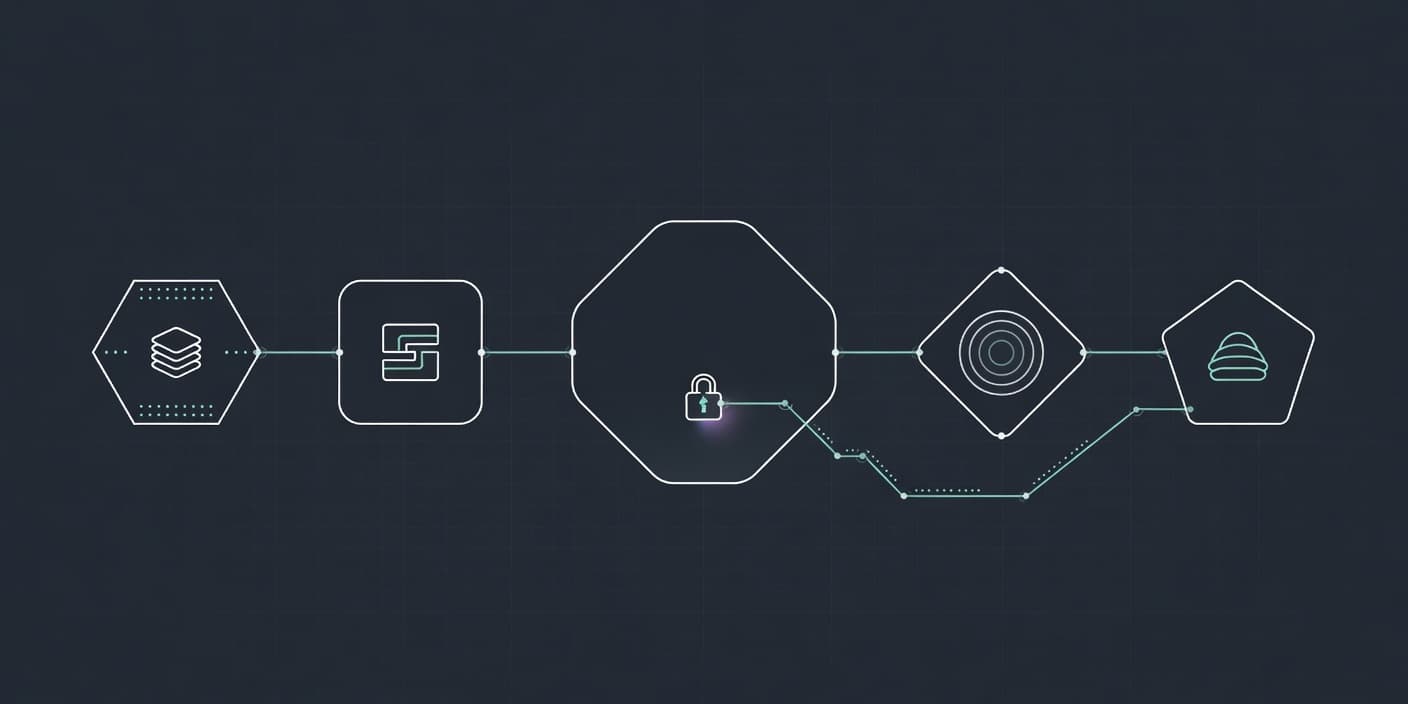
This is not one vendor's idea. A product category called the "agent gateway" is forming to sit between AI agents and the tools they touch, centralizing permissions, authentication, and audit logs. Solo.io donated its agentgateway project to the Linux Foundation in June with backing from Microsoft, Red Hat, Salesforce, and Adobe, and both Microsoft's Agent 365 and Google's Gemini Enterprise are betting that governance, not raw model horsepower, is what gates real deployment (Forbes). It is the same instinct behind the Arios Intelligence Framework's governance phase: guardrails from day one, not bolted on after something breaks.
Almost all of this coverage is written for CIOs at Fortune 500 companies, not for the owner of a 30-person business who just connected an AI assistant to their calendar, CRM, or customer email list.
Why does a review step matter more than a smarter model?
Because a smarter model still takes the wrong action faster. The failure that hurts a small business is not the agent being dumb. It is the agent being confident and unsupervised the one time it is wrong, with no human standing between the decision and the consequence.
Here is the contrarian part, and it is backed by data. The reflex is to assume more governance is always safer, but Gartner warned in May that applying uniform, one-size-fits-all rules across every AI agent will itself cause enterprise AI failures, because a low-risk drafting agent and a money-moving agent need different guardrails (Gartner).
There is a second gap that matters even more for a small team. Roughly 58 to 59 percent of organizations say they monitor their AI agents, but only 37 to 40 percent have an actual containment control: a real stop button, not just a dashboard that logs what already happened (Forbes). This is the same human-in-the-loop principle that separates AI adoption that sticks from AI adoption that quietly gets switched off.
Watching an agent send the wrong invoice is not safety. Being able to catch it before it sends is. I have sat with owners who proudly showed me a logging dashboard and called it oversight, and my honest response is that a log tells you what went wrong after your customer already got the email.
What does an approval gate look like in a real small business?
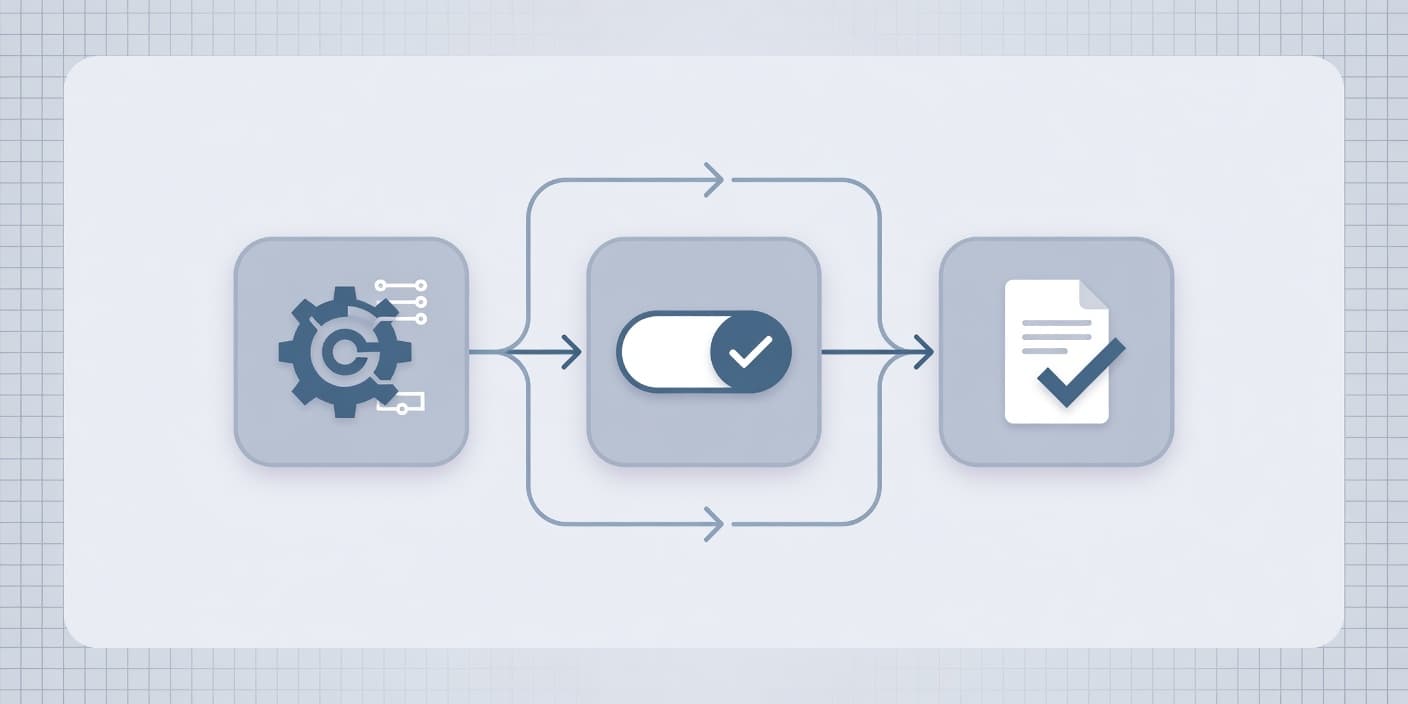
It looks like the agent doing all the preparation, then waiting for one click before anything leaves your building. The agent reads, sorts, drafts, and stages the action.
A person approves, edits, or rejects it. Nothing that touches money, a legal term, or a customer sees the light of day without that step.
Picture a dental practice using AI to handle patient recall messages. The agent drafts every "you're due for a cleaning" text and groups them by appointment type, and the office manager approves the whole batch in one pass instead of writing each one by hand.
Or a small logistics outfit where an agent watches inventory and prepares reorder purchase orders. The agent notices a warehouse is low and stages a 500-unit order, but a manager confirms before it is placed, which is exactly where you catch the decimal-point mistake that would have ordered 5,000.
This is the pattern we design into every Perpetua deployment: the AI runs the recurring work continuously, and its "Mission Control" view surfaces the handful of actions waiting on a human. The review checkpoint is not an afterthought bolted on for comfort. It is the thing that makes an owner willing to switch the automation on at all.
Is being "stuck in experimentation" actually a failure?
Often it is not. It is caution doing its job. Pax8 research published July 13 found 61 percent of small businesses are actively using AI and another 29 percent are experimenting, but nearly one in three AI-using SMBs cannot move from testing into real deployment (GlobeNewswire).
The standard read is that these owners are falling behind. I would push back on that. Plenty of them can feel that handing an agent full autonomy over their email or their books is a bad trade, and they have not been shown the middle option between off and fully automatic.
The businesses that cross from test to production are usually the ones that solved the review-step problem first, not the ones that granted the most freedom. The same Pax8 research notes the fastest practical wins sit in email triage, lead handling, support replies, and finance admin.
That is not a limited version of AI adoption. That is the version that actually ships.
So what does this mean for your business?
It means the review gate is what lets you move an AI agent out of the sandbox and into real work. If you have been hesitating to let a tool act on its own, the fix is not waiting for a better model next year. It is adding an approval step so you can turn the automation on now.
The gate protects money directly. One review checkpoint catches the single bad action, the wrong invoice, the mistaken bulk email, the runaway inventory order, before it costs you real cash or a customer relationship.
It also protects your time, which is the part owners miss. A good gate still automates the routine actions; you only spend attention on the few that genuinely need a human. You are reviewing the exceptions, which is what your judgment was always for.
Pick one workflow, add a human approval step, then automate everything up to that click. You can read more operational patterns like this on the AI Insights Hub.
Frequently asked questions
What is an "AI agent approval gate," and do I need one for my business?
An approval gate is a required human sign-off before an AI agent takes a real action, like sending an email, placing an order, or moving money. The agent prepares everything, then waits for a person to approve or reject. You need one for any action that touches customers, cash, or legal terms.
Doesn't requiring approval just make automation slower?
No, because the agent still does all the preparation and handles the routine actions. You only review the exceptions, not every task. A well-built gate lets a manager approve a full batch in one pass.
What is the difference between "monitoring" an AI agent and actually being able to stop it?
Monitoring means you can see what the agent did, usually in a log, after it happened. Stopping means you can intervene before the action goes out. Most organizations have the first and lack the second, which is a false sense of safety.
How do I add an approval step to AI tools I'm already using?
List which actions actually leave your business or spend money, then route only those through a human. Many tools offer a draft or "require confirmation" mode; turn it on. For anything that lacks it, keep the agent in a suggest-only role for now.
Does needing a review step mean AI agents aren't ready for small businesses yet?
No. The review step is what makes them ready. The businesses succeeding with AI right now are the ones who automated the routine work and kept a human on the final decision, not the ones who granted full autonomy.